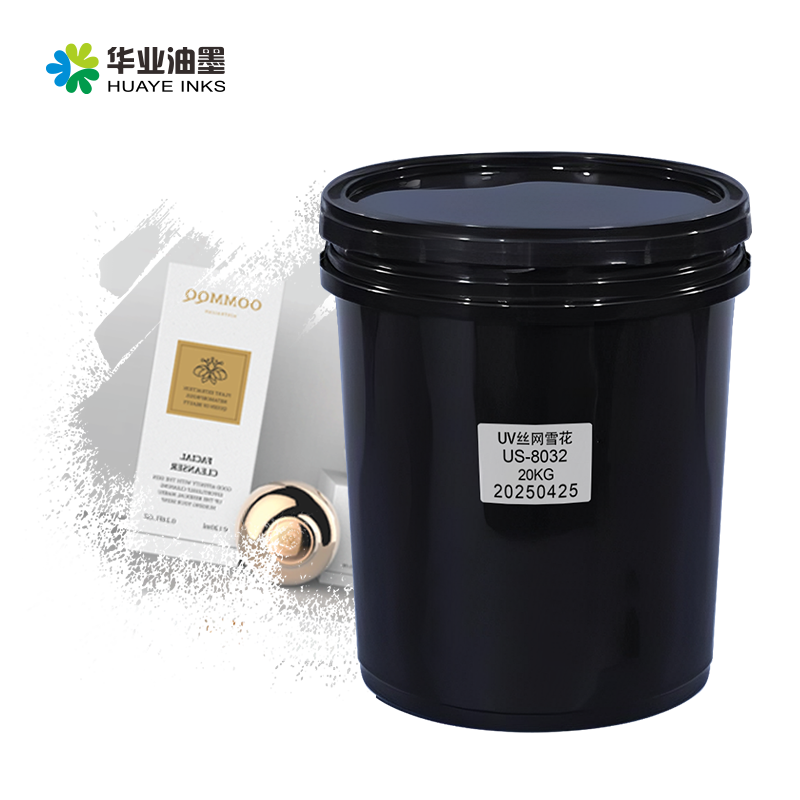
UV curable ink has emerged as a transformative force in the printing and coating industries, offering a unique combination of rapid drying, durability, and high - performance characteristics. At its essence, UV curable ink is formulated to undergo a chemical transformation, known as polymerization, when exposed to ultraviolet (UV) light. This process enables the ink to dry and cure almost instantaneously, setting it apart from traditional solvent - based or water - based inks. The composition of UV curable ink typically consists of several key components. Oligomers and monomers form the backbone of the ink, providing the structure and properties of the cured film. Pigments are added to impart color, while photoinitiators are the crucial elements that initiate the curing process. When UV light is applied, the photoinitiators absorb the energy and generate free radicals or cations, which then react with the oligomers and monomers to form a cross - linked polymer network. This rapid curing mechanism results in a hard, durable, and chemically resistant film. One of the most significant advantages of UV curable ink is its speed. The instant drying and curing process eliminates the need for long drying times, significantly increasing production efficiency. This is particularly beneficial in high - volume printing and coating operations, where quick turnaround times are essential. Additionally, the lack of drying time reduces the risk of smudging, smearing, and adhesion issues, ensuring high - quality prints and coatings. Durability is another key feature of UV curable ink. Once cured, the ink forms a tough, abrasion - resistant film that is highly resistant to fading, chemicals, and UV radiation. This makes it ideal for applications where the printed or coated products are exposed to harsh environments or frequent handling, such as outdoor signage, automotive parts, and electronic devices. The ink's resistance to moisture also makes it suitable for packaging applications, protecting the products inside from damage. UV curable ink also offers excellent print quality. It provides high color saturation, sharpness, and resolution, allowing for the reproduction of detailed and vibrant images. The ink can be formulated to achieve a wide range of colors, including Pantone - matched shades, ensuring consistent and accurate color reproduction. Moreover, the ink has good adhesion properties on various substrates, such as plastics, metals, glass, paper, and cardboard, making it highly versatile for different industries. However, working with UV curable ink requires specialized equipment. UV curing systems, such as UV lamps or LED UV curing units, are necessary to provide the required UV light for the ink to cure. These systems need to be properly calibrated to ensure optimal curing conditions. Additionally, UV curable ink has a relatively short shelf life and requires proper storage conditions to prevent premature curing. Despite these challenges, the continuous advancements in UV curable ink technology are constantly improving its performance. Newer formulations are being developed to enhance curing speed, reduce energy consumption, improve adhesion on difficult substrates, and lower the cost. As the demand for high - quality, durable, and environmentally friendly printing and coating solutions continues to grow, UV curable ink is expected to play an increasingly important role in various industries.

 EN
EN