
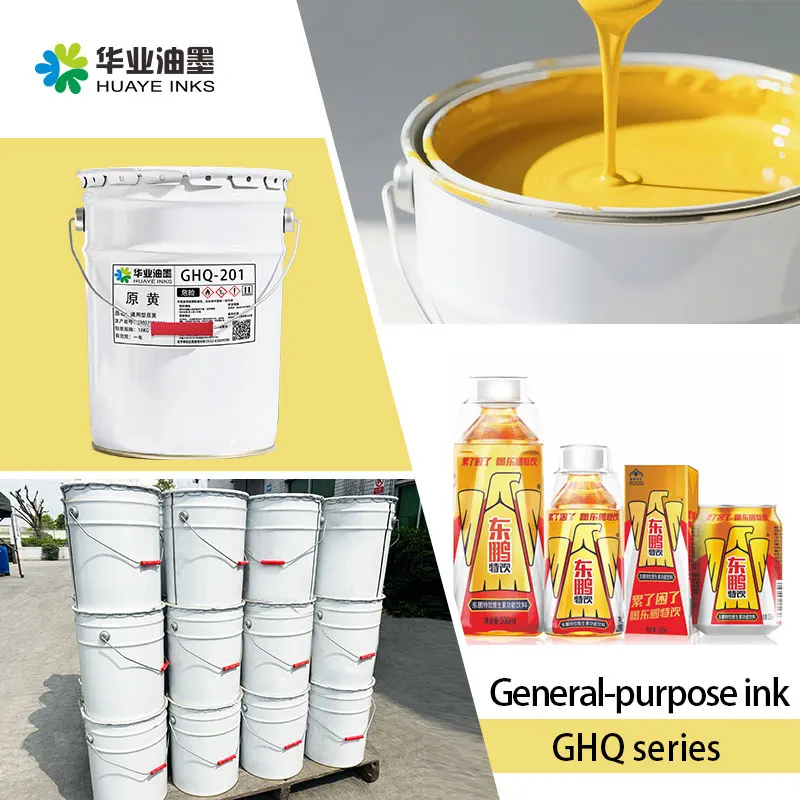
The formulation of UV flexo ink is a complex and precise science that involves the careful selection and combination of various ingredients to create inks with specific performance characteristics suitable for flexographic printing and ultraviolet curing. Each component in the formulation plays a vital role in determining the ink's properties, from color quality to durability and curing behavior. Pigments are a fundamental part of UV flexo ink formulation. They are responsible for the color of the ink and are selected based on several factors. Color strength is crucial, as it determines how vivid the printed color will be. Pigments with high color strength can produce intense, eye - catching colors even in thin layers of ink. Lightfastness is another important consideration, especially for applications where the printed products will be exposed to sunlight. Pigments with good lightfastness will resist fading over time, ensuring the longevity of the printed designs. Additionally, the particle size and shape of the pigments can affect the ink's viscosity, flow properties, and printability. Monomers and oligomers form the backbone of the UV flexo ink. Monomers are low - molecular - weight compounds that can react and polymerize during the UV curing process. Oligomers, on the other hand, are larger molecules that provide the structural integrity and film - forming properties of the cured ink. The choice of monomers and oligomers depends on the desired properties of the cured ink, such as hardness, flexibility, and chemical resistance. Different combinations can be used to create inks suitable for various substrates and applications. For example, inks for printing on flexible packaging materials may require a more flexible film, while inks for labels may need to be harder and more abrasion - resistant. Photoinitiators are key components in UV flexo ink formulation as they initiate the curing process. When exposed to ultraviolet light, photoinitiators absorb the light energy and generate reactive species, such as free radicals or cations. These reactive species then react with the monomers and oligomers, causing them to polymerize and form a cross - linked polymer network. The type and concentration of photoinitiators can significantly affect the curing speed and efficiency of the ink. A higher concentration of photoinitiators generally leads to faster curing, but it may also have an impact on the ink's shelf life and other properties. Additives are used in UV flexo ink formulation to optimize various properties. Surfactants are added to control the surface tension of the ink, ensuring good wetting and spreading on the substrate. This helps prevent issues such as ink beading or poor coverage. Thickeners are used to adjust the viscosity of the ink, making it suitable for the flexographic printing process. Viscosity control is important to ensure proper ink transfer from the printing plate to the substrate. Defoamers are included to prevent the formation of foam during the ink manufacturing process and printing, as foam can disrupt the printing quality. The formulation of UV flexo ink also takes into account environmental and safety considerations. In recent years, there has been a growing trend towards developing more eco - friendly inks with reduced volatile organic compound (VOC) emissions. This has led to the use of alternative raw materials and the optimization of formulations to meet strict environmental regulations. Overall, the formulation of UV flexo ink is a delicate balance of art and science. It requires a deep understanding of the chemical properties of the ingredients, the printing process, and the end - use requirements of the printed products. Continuous research and development efforts are ongoing to improve ink formulations, making them more efficient, sustainable, and versatile for the ever - evolving needs of the printing industry.