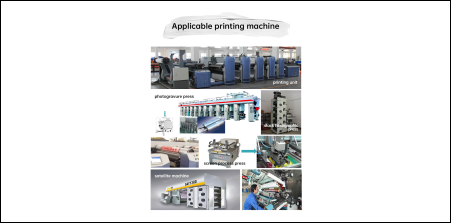
Flexo press printing, short for flexographic press printing, is a widely adopted printing method known for its efficiency, versatility, and cost - effectiveness. This printing process involves the transfer of ink from a flexible relief plate (the printing plate) to a substrate, making it suitable for a diverse range of applications across multiple industries. The heart of flexo press printing is the flexographic press, which consists of several key components. The printing plate, typically made of rubber or photopolymer, has a raised image area that holds the ink. Ink is applied to the plate using an anilox roll, a highly engraved roller that metes out a precise amount of ink. The ink - coated plate then comes into contact with the substrate, transferring the ink to create the printed image. This process can be carried out on a variety of substrates, including paper, cardboard, plastic films, metal foils, and laminates, making flexo press printing extremely versatile. One of the significant advantages of flexo press printing is its high - speed production capabilities. The continuous rotation of the printing plate and the efficient ink transfer mechanism allow for rapid printing, making it ideal for large - volume production runs. In industries such as packaging, where thousands or even millions of labels, cartons, or bags need to be printed quickly, flexo press printing can meet the demand with ease. Flexo press printing also offers excellent print quality. Advances in plate - making technology and ink formulation have enabled the reproduction of fine details, sharp text, and vibrant colors. The use of high - quality flexo printing inks, combined with the precise ink transfer of the anilox roll, ensures consistent color density and accurate color registration. This makes flexo press printing suitable for applications where both visual appeal and product information accuracy are crucial, such as in branding and product packaging. Another benefit is the flexibility in printing on different substrates with varying surface properties. The adjustable pressure settings of the flexographic press and the compatibility of flexo printing inks with different materials allow for seamless printing on both porous and non - porous surfaces. Whether it's printing on the rough surface of corrugated cardboard or the smooth surface of a plastic film, flexo press printing can deliver high - quality results. However, setting up a flexo press printing operation requires careful calibration and maintenance of the equipment. The printing plates need to be accurately mounted, and the anilox roll must be properly cleaned and maintained to ensure consistent ink transfer. Despite these requirements, the numerous advantages of flexo press printing make it a preferred choice for many printing businesses looking for a reliable and efficient printing solution.