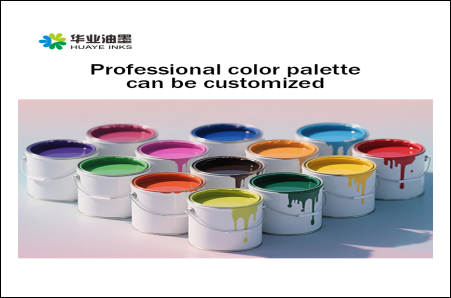
Water - based ink for gravure printing represents a more environmentally friendly alternative to traditional solvent - based inks used in the gravure printing process. As environmental concerns grow and regulations regarding volatile organic compounds (VOCs) become stricter, water - based inks have gained significant popularity in the printing industry. The formulation of water - based ink for gravure printing is centered around water as the primary solvent. Instead of using organic solvents that can release harmful VOCs into the atmosphere, water - based inks use water to dissolve or disperse the pigments, binders, and other additives. This makes them a more sustainable choice, as they contribute less to air pollution and have a lower impact on indoor air quality in printing facilities. Despite using water as the solvent, water - based ink for gravure printing can still deliver high - quality prints. The pigments used are carefully selected to ensure good color strength, saturation, and lightfastness. They are dispersed evenly in the water - based medium to achieve consistent color reproduction. The binders in the ink play a crucial role in forming a durable film on the substrate. They are formulated to provide good adhesion to different types of substrates, such as paper, cardboard, and some types of plastic films. However, formulating water - based ink for gravure printing comes with its own challenges. Water has different physical properties compared to organic solvents, such as a higher boiling point and different surface tension. These properties affect the ink's viscosity, drying speed, and wetting ability. To address these issues, special additives are used in water - based inks. For example, humectants are added to control the drying speed and prevent the ink from drying too quickly, which could cause issues such as nozzle clogging in inkjet - based gravure printing or uneven drying on the substrate. Water - based ink for gravure printing also needs to have good resistance to water, moisture, and other environmental factors. Since water is the main component of the ink, it must be formulated to prevent issues such as smudging or re - wetting of the printed images when exposed to moisture. Special water - resistant agents and cross - linking agents are often incorporated into the ink to enhance its durability and performance. As technology continues to advance, the performance of water - based ink for gravure printing is constantly improving. New formulations and additives are being developed to overcome the traditional limitations of water - based inks, making them a viable and increasingly popular choice for a wide range of gravure printing applications, from packaging to labels and decorative printing.