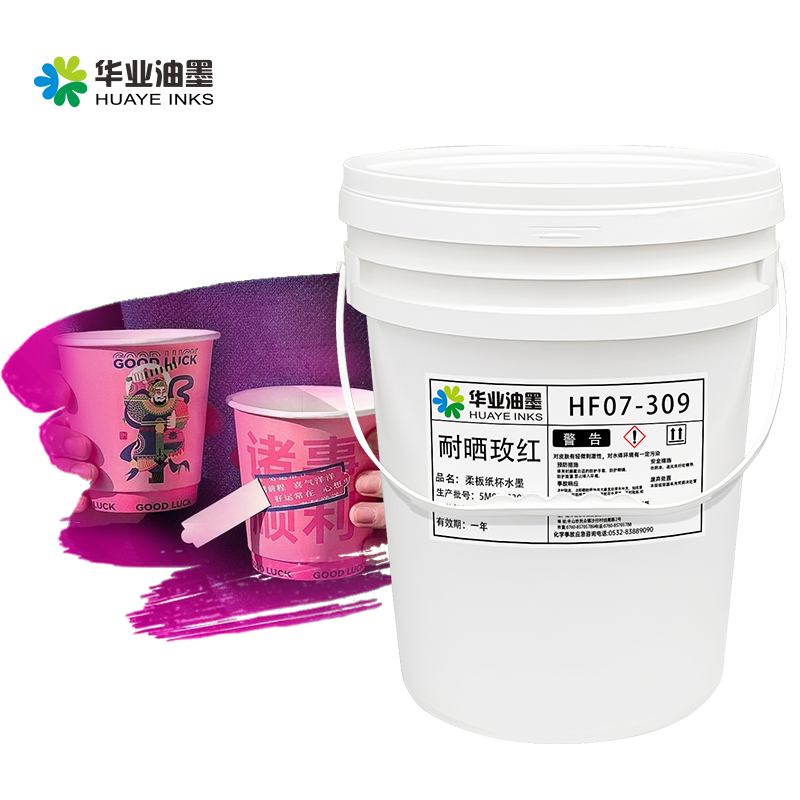
Water based screen printing has emerged as a revolutionary technique in the printing industry, offering a blend of environmental friendliness, versatility, and high - quality results. At its core, this method utilizes water as the primary solvent instead of traditional volatile organic compounds (VOCs) - laden solvents. This fundamental difference brings about numerous benefits, starting with its eco - friendly nature. Water based screen printing inks produce minimal emissions during the printing process, making it compliant with strict environmental regulations in many regions around the world. From a technical perspective, the water - based formulation allows for better control over the ink's viscosity and drying time. Printers can easily adjust these parameters according to the specific requirements of the project. For example, when printing on porous materials like fabric or paper, a lower viscosity ink can be used to ensure proper penetration and absorption, resulting in vibrant and long - lasting prints. On the other hand, for non - porous substrates such as plastics or metals, a slightly higher viscosity ink can be formulated to prevent smudging and ensure a sharp image transfer. The versatility of water based screen printing extends to its wide range of applications. In the textile industry, it is used to create intricate designs on clothing, bags, and home textiles. The water - based inks are gentle on fabrics, ensuring that the texture and feel of the material remain intact while providing excellent colorfastness. In the signage and graphics industry, it is employed to produce eye - catching banners, posters, and decals. The ability to print on various substrates, including vinyl, PVC, and acrylic, makes it a preferred choice for both indoor and outdoor applications. Another significant advantage of water based screen printing is its ease of cleanup. Since water is the main solvent, printers can simply use water and mild detergents to clean their screens, squeegees, and other equipment. This not only reduces the cost associated with cleaning solvents but also minimizes the risk of chemical exposure for the printing staff. However, like any printing technique, water based screen printing also has its challenges. One of the main issues is the longer drying time compared to solvent - based inks. This can slow down the production process, especially in high - volume printing operations. To address this, printers often use specialized drying equipment such as infrared dryers or forced - air dryers. Additionally, water - based inks may have limited adhesion on some substrates, requiring the use of primers or pretreatment processes to ensure proper bonding. Despite these challenges, the continuous advancements in water based screen printing technology are constantly improving its performance. Newer ink formulations are being developed to enhance drying speed, adhesion, and color vibrancy. Moreover, the growing demand for sustainable printing solutions is driving the adoption of water based screen printing across various industries, making it a technology with a bright future.