
 EN
EN
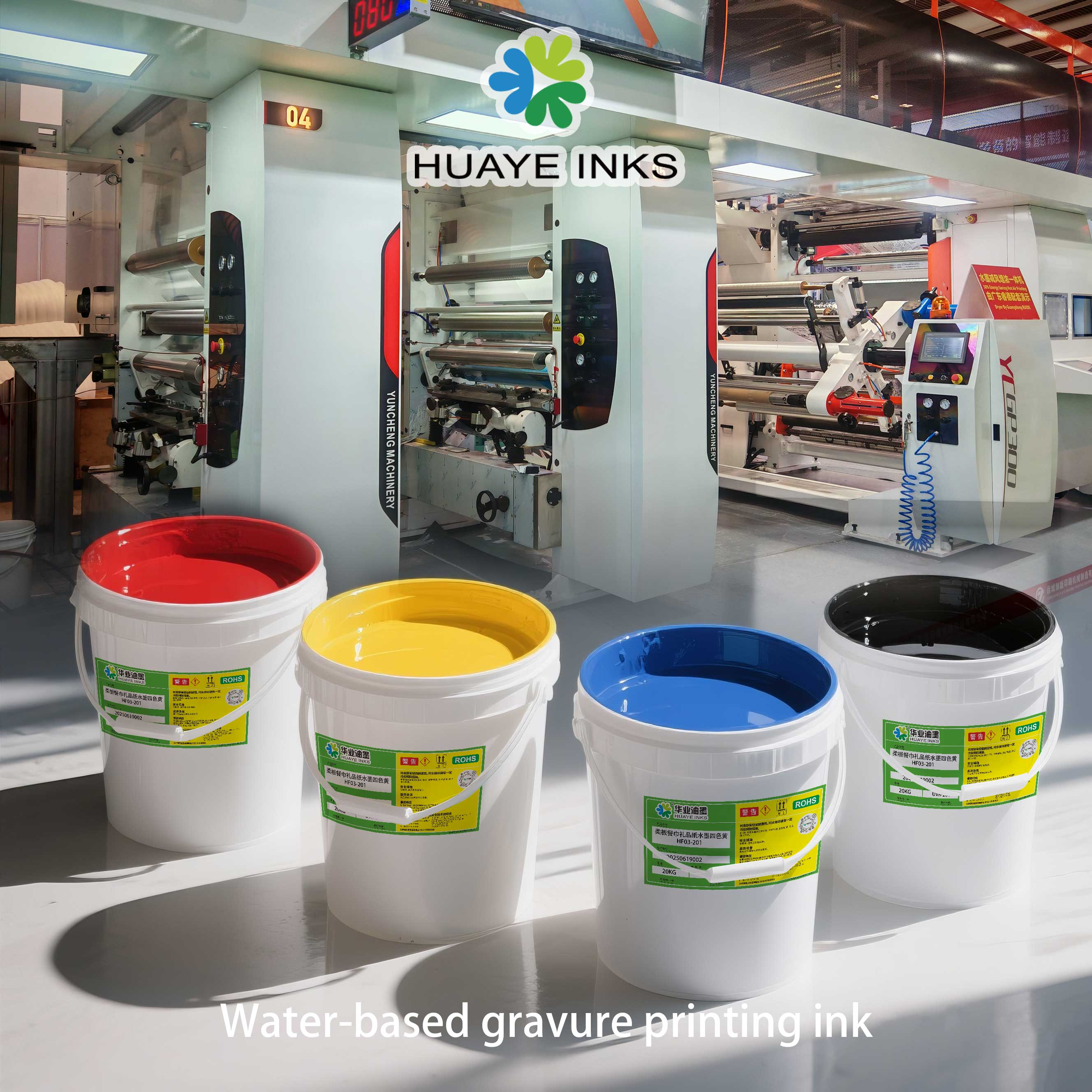
Understanding Aqueous Intaglio Printing Ink and Its Application on Plastics
What Defines Aqueous Intaglio Printing Ink for Plastic?
Water-based intaglio printing ink works great for plastics because it mixes regular water formulas with those fancy engraving methods that create really sharp, long lasting prints on smooth polymer stuff like polyethylene or polypropylene. What makes this different from the old solvent type inks is how they actually work. Instead of just sitting there, these inks get transferred through specially carved cylinders that push color into tiny grooves on the printing plate surface. Getting good results depends a lot on getting the ink consistency right. The stuff needs to stay thick enough while it fills those microscopic spaces but still release properly when needed. Most experienced printers know that controlling this viscosity balance is what separates decent prints from truly outstanding ones in the industry today.
Composition and Environmental Advantages of Water-Based Inks
Modern aqueous intaglio inks consist of three core components:
- Water (60-75%): Serves as the primary carrier fluid
- Acrylic/polyurethane resins (15-25%): Enable strong adhesion to plastic substrates
- Functional additives (5-10%): Enhance wetting, drying, and flow characteristics
These formulations reduce volatile organic compounds (VOCs) by 70-90% compared to UV-curable or solvent-based alternatives (EHS Journal 2023), supporting compliance with environmental regulations such as the EPA’s Toxic Substances Control Act. Their water solubility also simplifies press cleanup and supports recycling efforts in sustainable packaging operations.
How Intaglio Printing Differs from Other Methods on Polymer Substrates
Intaglio printing stands apart from flexography and pad printing through its unique ink transfer mechanism:
| Feature | Intaglio | Flexography |
|---|---|---|
| Plate Type | Engraved recesses | Raised relief |
| Ink Viscosity | 8,000-12,000 cP | 100-500 cP |
| Substrate Pressure | 25-40 psi | 5-15 psi |
The process achieves sub-0.1 mm registration accuracy by trapping ink hydrodynamically within engraved cells—making it ideal for security printing and metallic finishes on items like credit cards. Recent advances in rotogravure technology demonstrate 95% ink transfer efficiency on treated PET films, surpassing screen printing’s typical 65-75% yield.
The Science Behind Ink Adhesion to Plastic Surfaces
Surface Energy and Surface Tension Relationship in Ink Bonding
Getting good adhesion with aqueous intaglio ink really comes down to getting the surface energies right between what's being printed and the material itself. When working with polymers that have surface energy over about 40 dynes per square centimeter, we see much better bonding because there's less tension where the two materials meet. The ink just spreads out more naturally across the surface instead of beading up or pulling away. This match matters a lot since it affects how the ink actually sticks to the substrate through both physical locking mechanisms and chemical reactions happening at the boundary layer between them.
Wetting of Liquids on Solid Surfaces: Role in Aqueous Ink Performance
For proper adhesion, aqueous inks must achieve a contact angle below 90° to ensure adequate spreading. Research from the Flexographic Technical Association shows that poor wetting leads to defects like fisheyes, especially on low-energy polyolefins such as polyethylene. Surface treatments enhance polarity, improving water-based ink receptivity by 60-80% in industrial settings.
Critical Surface Energy Thresholds for Effective Ink Adhesion
| Polymer Type | Minimum Dyne Level | Adhesion Outcome |
|---|---|---|
| Untreated PP/PE | 29-31 dynes/cm² | Poor (<10% bond strength) |
| Plasma-treated PET | 42-45 dynes/cm² | Excellent (>95% adhesion) |
Most aqueous intaglio systems require substrates exceeding 36 dynes/cm² for reliable print durability. Since untreated polypropylene and LDPE typically fall below this threshold, surface modification is critical.
Adhesion Challenges on Low Dyne Plastics and How to Overcome Them
Plastics with low surface tension (around 34 dynes per square centimeter or below) tend to repel water-based inks because they're naturally water resistant. When we apply flame treatment, it adds oxygen molecules to the surface which boosts the surface energy of polypropylene materials up to somewhere between 45 and 50 dynes per square cm in just under half a second. For materials that can't handle much heat, corona discharge works wonders too, making bonds stick about three times stronger without warping or distorting the material dimensions. After any treatment process, running dyne tests according to the ISO 8296 standard helps maintain quality control so every batch coming off the production line performs reliably from one run to the next.
Key Factors Influencing Adhesion of Aqueous Intaglio Inks
Successful adhesion hinges on three interdependent factors: substrate compatibility, ink chemistry, and drying dynamics. Together, they determine whether the final print layer remains intact or delaminates under stress.
Impact of Plastic Substrate Type on Ink Bonding Efficiency
The surface energy of different plastics changes quite a bit, which really impacts how well liquids spread across them. Materials with high energy levels like PET have values around 45 dyne/cm or higher, making them great for ink application. On the flip side, polypropylene struggles because it sits below 34 dyne/cm mark. For those working with materials that don't take to coatings easily, there are ways to fix this problem. Plasma treatments work wonders on polyethylene surfaces, boosting their dyne level all the way from about 31 up to nearly 60 dyne/cm according to research published by Plastics Engineering Society back in 2023. This kind of surface modification helps bridge the gap when trying to get proper adhesion between materials.
Influence of Ink Formulation on Adhesion to Non-Porous Substrates
Advanced aqueous intaglio inks incorporate acrylic resins (35-50% by weight), surfactants, and adhesion promoters. Flexible resin chains conform to surface microstructures, while cationic surfactants form electrostatic bonds with activated substrates. Leading manufacturers fine-tune pH (8.5-9.2) and viscosity (1,200-1,800 cP) to optimize flow and film cohesion without sacrificing transfer precision.
Drying Mechanisms and Film Formation in Aqueous Intaglio Systems
Controlled evaporation prevents premature skinning, where rapid surface drying traps moisture and weakens adhesion. Ideal drying occurs at 65-75°C with 40-50% humidity, enabling a phased process:
- Water evaporation (0-90 seconds)
- Resin coalescence (90-180 seconds)
- Cross-linking (180-300 seconds)
This sequence ensures complete film formation while respecting the thermal limits of sensitive plastic substrates.
Surface Activation Techniques to Enhance Printability of Plastics
Atmospheric Plasma Treatment for Enhancing Plastic Printability
When atmospheric plasma treatment is applied to polymer surfaces, it basically bombards them with ionized gas that creates all sorts of reactive spots on the material. This process actually increases surface energy quite dramatically, going from under 40 up to more than 55 dynes per square centimeter according to Enercon Industries research from last year. What does this mean? Well, it allows for much better bonding when using aqueous intaglio ink on materials such as polyethylene or PET films. And here's where things get interesting compared to traditional methods. Chemical primers tend to leave behind residues that can cause problems later on. But with plasma treatment, there's absolutely nothing left behind after the process. Plus, we're talking about achieving those super high surface energies similar to glass at around 72 dynes/cm without having to deal with any of the environmental issues that come with chemical treatments.
Flame Treatment and Its Effect on Surface Energy of Polyolefins
When we apply flame treatment to polyolefin materials, what happens is that controlled burning creates oxidation on the surface, which leads to the formation of those important hydroxyl and carbonyl groups. For polypropylene containers specifically, even brief exposure times between around 0.02 and 0.04 seconds can boost dyne levels significantly—from about 29 up to 45. That's well above the 38 dyne per centimeter threshold required for proper adhesion of water based inks. Another benefit worth mentioning is how this method actually creates some tiny scale roughness on the material surface, typically measuring between 0.5 and 1.2 micrometers in Ra value. This microscopic texture helps improve the mechanical bonding when films are applied later on.
Corona vs. Plasma: Comparing Surface Activation Efficacy
| Parameter | Corona Treatment | Plasma Treatment |
|---|---|---|
| Treatment Depth | 2-5 nm | 5-20 nm |
| Substrate Thickness Limit | ±125 μm | No practical limit |
| Oxygen Functionality | +18% | +32% |
| Operational Costs | $0.02/m² | $0.05/m² |
| Suitable Materials | Films, Foils | 3D Parts, Textured Surfaces |
A 2023 surface activation study found plasma-treated HDPE retained 94% ink adhesion after 500 humidity cycles, compared to 78% for corona-treated samples.
Measuring Dyne Levels Post-Treatment to Ensure Ink Adhesion
Surface activation can be checked right away using dyne test fluids that typically fall within the 30 to 60 dynes per centimeter range. When working with water-based inks, most operators aim for at least 42 dynes/cm on polyolefin surfaces and around 50 dynes/cm or higher for materials such as PEEK and other engineering plastics. The latest technology has brought real time UV Visible spectroscopy into production lines, which lets manufacturers monitor oxygen levels on surfaces during processing. These readings usually need to stay between about 15% and 22% atomic oxygen content. This kind of monitoring helps catch potential issues early so problems don't show up after the printing process starts running.
Real-World Performance and Optimization Strategies
Aqueous intaglio printing ink sticks well to plastic surfaces when the right surface treatment matches the material properties. We saw this in practice with PET films that had been exposed to atmospheric plasma treatment. These samples kept about 95 percent of their ink adhesion after application, whereas the ones without any treatment couldn't even pass simple tape testing for stickiness. The same issue happened with polypropylene containers too. Without proper surface preparation, the ink just peeled right off completely within a day because it wasn't able to properly wet the surface.
Long-term testing confirms system resilience: treated polyethylene retained 85% ink integrity after 1,000 humidity cycles (40°C / 90% RH) and met ASTM D5264 abrasion resistance standards. Key optimization strategies include:
- Surface energy matching: Target 40-50 dynes/cm for polyolefins using flame or plasma
- Rheology adjustments: Maintain ink viscosity between 12-18 Pa·s for balanced flow and film formation
- Drying protocols: Use multi-stage infrared drying at 60-80°C to prevent blistering
For quality assurance, manufacturers increasingly pair cross-hatch testing (ISO 2409) with digital adhesion analyzers to quantify bond strength. These integrated approaches have been shown to reduce adhesion-related waste by 34% in high-volume packaging production.
Frequently Asked Questions
What are the environmental benefits of using aqueous intaglio inks?
Aqueous intaglio inks significantly reduce volatile organic compounds (VOCs) by 70-90% compared to traditional solvent-based inks. This makes them an environmentally friendly choice, supporting compliance with regulations like EPA’s Toxic Substances Control Act.
How does surface treatment affect ink adhesion?
Surface treatment plays a crucial role in enhancing ink adhesion, especially on plastics with low surface energy. Techniques like flame and plasma treatment increase the surface energy, allowing for better ink bonding.
Why is viscosity important in intaglio printing?
Viscosity is critical in intaglio printing because it ensures that the ink is thick enough to fill microscopic spaces on the printing plate but fluid enough to release properly. Proper viscosity balance can distinguish exceptional prints from average ones.
Table of Contents
- Understanding Aqueous Intaglio Printing Ink and Its Application on Plastics
- The Science Behind Ink Adhesion to Plastic Surfaces
- Key Factors Influencing Adhesion of Aqueous Intaglio Inks
- Surface Activation Techniques to Enhance Printability of Plastics
- Real-World Performance and Optimization Strategies
- Frequently Asked Questions